Small moments build culture. Every interaction gives adults an opportunity to teach, encourage, assist, and model the character and life skills young people need to grow.
EXPLORE TEAM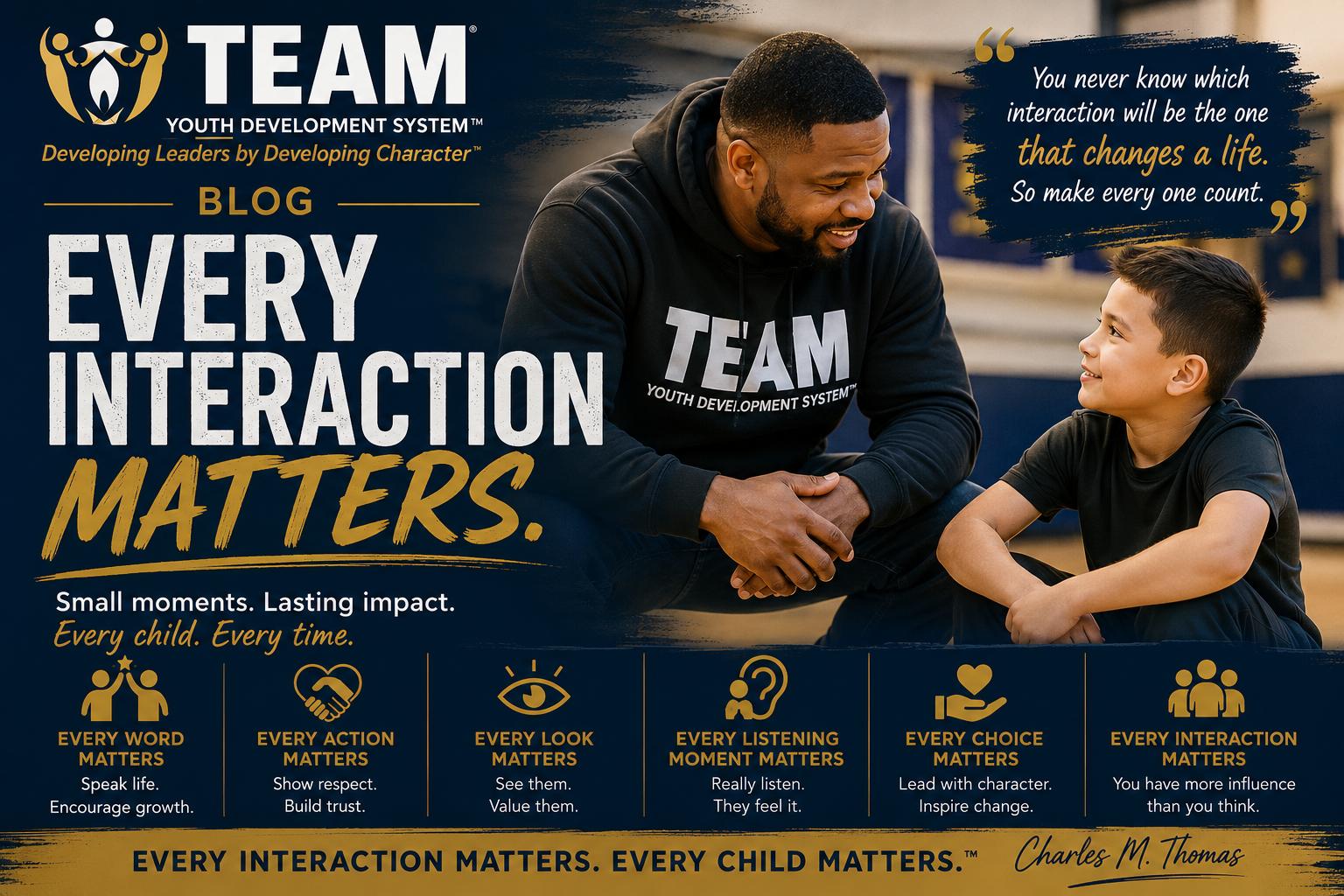
When most people think about youth development, they think about big moments. They think about the keynote speech that changes a student’s perspective. They think about the championship season. They think about the intervention conversation, the life-changing mentor, the graduation stage, or the moment a young person finally turns a corner.
Those moments matter. But if we are honest, most of the real shaping of a young person’s life does not happen in dramatic moments. It happens in ordinary ones.
It happens in the tone an adult uses when a child makes a mistake. It happens in whether a coach humiliates or teaches. It happens in whether a teacher notices effort or only notices disruption. It happens in whether a parent corrects with dignity or with shame. It happens in whether an afterschool staff member treats a conflict as an interruption to survive or a teaching moment to use.
That is why one of the foundational beliefs of TEAM is simple: Every Interaction Matters. Every young person is being shaped by the interactions they experience, and every adult is leaving something behind in those moments whether they realize it or not.
Culture is not built only by mission statements, strategic plans, slogans, or posters on a wall. Culture is built by repeated interactions. It is built by what adults consistently teach, tolerate, encourage, correct, ignore, celebrate, and model. If you want to understand the true culture of a classroom, team, school, camp, or youth program, do not only read the values statement. Watch the interactions.
Watch how adults respond when a young person is disrespectful. Watch how they respond when a child is embarrassed, discouraged, angry, or overwhelmed. Watch whether the adults around them know how to correct without crushing, challenge without humiliating, and lead without making everything about control. Watch whether adults build trust, belonging, responsibility, and courage in the small moments that most people overlook.
This matters because young people do not only learn from formal lessons. They learn from emotional climate. They learn from tone. They learn from consistency. They learn from whether they feel seen, safe, challenged, and believed in. They learn from whether adults help them make sense of failure or simply make them feel like failures. They learn from whether the environment around them teaches dignity, ownership, repair, perseverance, and self-control—or whether it teaches fear, hiding, blame, and emotional shutdown.
The small moments become the culture because they become the repeated experience. A single encouraging conversation may not change everything overnight. But repeated encouragement can reshape how a young person sees themselves. One correction handled with dignity may not solve a long-term pattern. But repeated correction that protects relationship while building accountability can transform how a young person responds to authority and responsibility over time.
This is where TEAM becomes more than a philosophy statement. TEAM gives adults a way to be intentional in the moments that usually pass without reflection. Teach. Encourage. Assist. Model. Those four words turn everyday interactions into developmental opportunities.
Teach means we do not assume young people already know the skill. Encourage means we do not only point out failure; we speak courage and possibility into growth. Assist means we provide support, structure, and coaching instead of only demanding change. Model means we remember that young people are always learning from how we handle frustration, conflict, honesty, responsibility, and repair.
When adults lead this way consistently, the culture changes. The environment begins to feel different. Young people begin to expect dignity and accountability to live in the same room. Staff begin to think differently about correction. Parents begin to think differently about discipline. Leaders begin to realize that culture is not something abstract. It is something we are building every day through interaction after interaction after interaction.
That is why Every Interaction Matters is not a slogan. It is a leadership responsibility. It is a reminder that no adult who works with young people gets to hide behind the idea that only the big moments count. The hallway moment counts. The practice moment counts. The classroom redirection counts. The car ride home counts. The email counts. The lunchroom conversation counts. The moment after a mistake counts. The way we welcome, correct, encourage, and respond all count.
Young people are becoming someone. The question is not whether they are being shaped. They are. The question is whether the adults around them are being intentional about how that shaping happens. TEAM answers that question with a challenge: lead the small moments on purpose. Because small moments build culture. And culture helps shape lives.